
Seraphine
A horror story about the shattered dream of motherhood

My good old friend Xenia had always been a force of nature. Even with a childhood ruined by heavily drinking parents, this girl pushed her way into a medical degree and a career in dentistry. Her marriage ended the moment her husband realized she wouldn’t play mother or be his tame bitch. Xenia was everything but heartbroken—until the day she decided she wanted a child.
Divorce wasn’t much of an obstacle; she could still draw the gaze of any man she chose and made enough money to be a solo mom. But every doctor—whether it was the weary gynecologist at the local clinic or the world-traveled professors with their shelves full of diplomas—always delivered the same unshakable sentence. Even if Xenia somehow managed to conceive, she would never be able to carry the child to term.
Picture credits:
This is when the abyss looked at my friend from the bottom of the brandy bottle. On weekdays, she kept her drinking under control for her patients’ sake. On weekends, she collapsed into it completely and was barely able to speak. I’d never seen anyone crawl toward death with such ardor. I tried to pull her back—hospital runs, long talks—but I had two jobs and a sick mom, and only so much left to give.
Xenia was ashamed and drank alone in her room, but soon the cat was out of the bag. In a town our size, rumors spread quickly. Xenia’s patients drifted away. She refused mental health treatment, afraid a diagnosis would finish what the gossip had started.
“Listen,” I told her once. “You would not have chosen your folks once again, would you? If you want to adopt, you have to get sober. They’ll never give a kid to a booze hag, do you get it?”
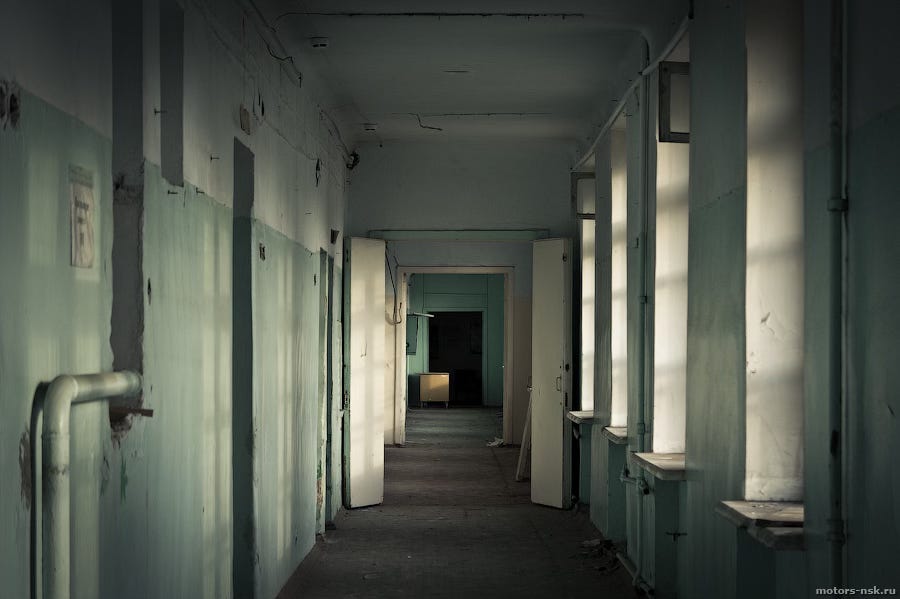
She only hummed—but something shifted. The next time cravings hit, she went walking deep into the forest near her house. It wasn’t the kind of forest people visited after dark; when we were kids, it was where a local gang dumped bodies - at least, rumors said so. Beyond it stood the rotting husk of a former madhouse. At first, I worried for her, but the walks seemed to help. Step by step, she sobered up.
The moment I started to feel relieved, Xenia stopped calling. She stopped answering as well.
When I finally arrived at her place, I ran into her sour-faced neighbor, who spat, “Your boozer friend adopted a feral brat.” This was something I could not believe. Legal procedures allowing her to adopt a child would have taken months. And Xenia's drunken brawl with her ex had still been talk of the town.
“You’re joking, aren’t you?” I muttered.
“Joking? That freak nearly killed my dog!”
Xenia took forever to open the door, as if deciding whether I should be let in. But when she did, she hugged me hard. She was radiant—skin glowing, eyes bright, as if someone had turned back her clock by ten years. And I could hear movement behind the closed bedroom door.
“Anu,” she whispered, almost giddy. “I’m a new mom now! Come meet Seraphine.”
Slowly, carefully, she opened the room.
Picture credits: Andhanan Gnanasekaran
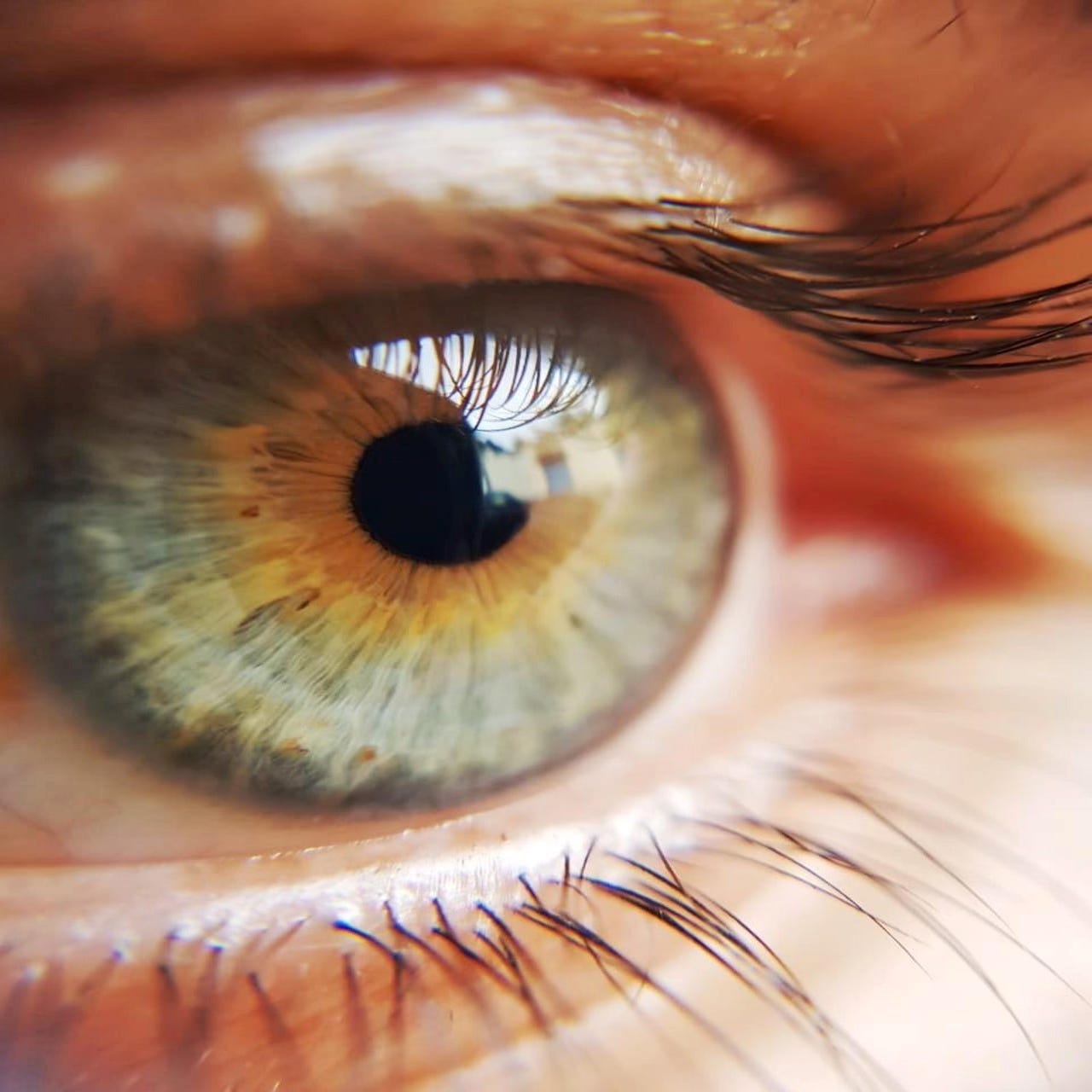
The girl in the bedroom couldn’t have been more than ten. Pale as porcelain, hair like bleached straw, her thinness made her seem almost weightless. Her eyes—a yellowish green, with pupils like pinpoints—fixed on me the way a kitten sizes up a wolfhound.
“Relax, sweetheart,” Xenia cooed. “Anu won’t hurt us, she’s a friend of mine.”
Seraphine didn’t move. Then, in a blink, she was gone, darting to the wardrobe with a speed and grace that made my skin tighten. Joyfully, Xenia suggested having a cup of tea.
“Does she speak?” I asked, walking into her pristine kitchen, seeing no bottles.
“Of course. That’s how I know her name. She’s smart. She’s just… been through hell.”
"To what lengths have you gone to get her?" I asked, full of surprise, while Xenia started making tea.
"I ran into Seraphine in the woods," Xenia said grimly. “Wearing nothing but pajamas and socks in January. Bruises on her face and shoulders.”
“What did she tell you?”
“She’d escaped some bad guys. Asked if I wanted to be her mom. She won’t talk about the rest, and I don’t push...”
“Who else knows?”
“Only you.”
“What about the old woman’s dog?”
Her face went pale in a heartbeat.
“That monster? She was only defending herself. It attacked us, you should have seen it, Lena! Beasts like that should be put down.”
“You should tell the police—”
“No police!” The ice in her voice made me pause. “They’ll take her away. Put her back in an orphanage—a prison for the innocent.”
“How do you know she’s from an orphanage?”
“Her clothes had an embroidered abbreviation. I looked it up—nothing.”
"May I take a picture? Perhaps I could get some clues this week..." I worked as a prosecutor assistant and had nearly unlimited access to some archives closed to the general public.
“Promise you won’t tell anyone.”
“You’ll have to, eventually.”
“When I know more. She’s still missing memories. I don’t want to push her.” Xenia sipped her tea. “Ah, she needs an orthodontist, too. No one’s ever bothered.”
“You’re not working?”
“For everyone, I’m on sick leave, OK?”
I left with a nest of snakes twisting in my gut. If Seraphine had parents, this could get ugly fast. In our world, a child—or even a teenager—was always a hostage to either their parents or the state. As a public official, I was sworn to uphold the state.
As I passed the house of Xenia’s neighbor, I glanced through the fence. A massive Caucasian Shepherd glared back, lips peeled over teeth meant to kill wolves. I couldn’t imagine a beanpole-thin girl harming it. But a thick white bandage wrapped its neck, and bloody stains were blooming through.
It didn’t take long to trace the origin of Seraphine’s clothes. The embroidered abbreviation matched the children’s mental asylum across the forest Xenia liked to wander. That might have explained the girl’s condition—if the place hadn’t been shuttered five years ago. At least, on paper.
The next morning, I adjusted my commute to pass the asylum. The gate hung open; the lock was gone. Inside, scavengers had stripped the place bare and left it drowning in trash. I didn’t bother with the attic or basement—it was obvious no one had lived here in years. This wasn’t the gothic ruin of horror films. It was worse: squalid, airless, dead. I asked the residents of the neighboring apartment block if they’d ever seen lights or movement. Every answer was no.
The former Chief Medical Officer had died in a horrific car crash just months before the last children were transferred—burned alive before rescue could arrive. The rest of the staff were still around, working as doctors, private nurses, and kindergarten teachers. I had no photo of Seraphine, but her description might be enough.
A thought struck me: She might be older than she looks. Some conditions do that. If so, one of the nurses might remember her.
The doctors yielded nothing, but my position as a prosecutor’s assistant impressed one retired nurse, Tamara, warm and motherly in her early sixties. I suggested meeting at a café; she insisted on tea at her home. Her flat smelled faintly of chamomile and damp wool, the curtains drawn against a gray sky. She spoke of the CMO’s death with a shiver, but her eyes held no sorrow—only contempt.
“Could anyone still be inside the asylum?” I asked.
“Of course not,” Tamara said, snapping the words. “The place flooded beyond repair because Sveta had ‘optimized reconstruction costs’ for years.”
I told her about meeting a girl named Seraphine—careful to omit that she was currently with Xenia.
Tamara’s face went pale. Her hands trembled slightly as she poured tea. “Seraphine was our patient in the nineties. She ran away… to the scoundrel who gave her life. I heard… she died there.”
“What did she suffer from?”
“Clinical lycanthropy. When distressed, she believed she became a wolf. She moved like one, too—low, silent, fast. Claimed her father was a wolf.”
“Had she ever seen wolves?”
“I think so. Otherwise, she couldn’t mimic them so perfectly. Our guard Misha was a Mansi man from Siberia and loved hunting when young. He often said she was a wolf locked inside a girl's body. He never believed the doctors.”
“And her parents?”
Tamara’s voice hardened. “The so-called mother was just out of school when she bore Seraphine. Women of her kind are in a permanent search for a fucker... " I shuddered when the nice Tamara spat this word out. "She was working at a gas station close to their village: a lot of men passed by, including the ones with money. The child was an obstacle. The doctor said the wolf story was her mind’s shield—better to imagine a wolf father than face the truth: a whore for a mother, some passing brute for a dad.”
“Could Seraphine have a younger sister?”
“Wouldn’t surprise me if her mother was knocked up again. I wouldn’t envy that child. The mother never visited Seraphine in the clinic, by the way.”
I stared at Tamara, listening to the low hum of the street outside. The story was more than tragic—it was alive, beyond the forest and the rotten gates.
“When she had tantrums,” Tamara added, “even her eyes changed color. But when happy, she used to be sweet. She even allowed me to call her Baby Girl, though usually kids her age detest it!”
"I will need her address," I said in the most official tone.
"Тhe village of Vereraba. This is all I know."
“Why go to that shithole in the first place?” the driver asked on the way to Vereraba. “Got a grandma down there?”
“An old friend,” I said, watching the drizzle smear the windows.
“She must be pretty old,” he laughed. “Everyone who could leave has left. Only the elderly stay.”
I sighed. Ordinary story. Seraphine’s biological mother must have moved elsewhere, too.
We stopped at the gas station—probably the one the nurse Tamara had mentioned. While the driver refueled, I ran to the shop to grab a coffee and see the saleswoman. However, I was served by a male worker. I asked if he had a colleague called Margo. "There's another shift man, Toomas," he smiled.
When we arrived, it started to drizzle—the nastiest weather one can imagine in winter. I gazed at the row of pitifully small houses before me, hoping to see any soul around. Finally, a grumpy old man strongly smelling of booze emerged from a barn carrying a fishing rod. He whistled to a shaggy gray dog and threw a piece of bread to him. The animal caught the treat in the air.
First, the local was glad to see someone new. But when I mentioned Seraphine and her mom, Margo, he shuddered as if I poked him with a red-hot crowbar, сrossed himself, and moved backwards to his barn. I sighed and showed him a banknote.
“They both died long ago. Why do you need them?” he asked suspiciously, staring at the note with his hungry eyes.
Goddamnit! Who then was the girl Xenia wanted to adopt?
“We are investigating a criminal case involving Seraphine”, I answered. The old man gave a dry laugh. “I will be grateful if you tell me about what exactly happened to that family.” I handed the money out to the man. "Who was the dad?"
“Margo gave birth soon after she left school and never mentioned her daughter’s father. Believe it or not, no one had ever seen her with a man. Some said she was gang-raped by a bunch of jerks from the city. Others said it was her own brother. He’d been in the military and died in a plane crash, days before Seraphine was born; however, nine months before her birth, he’d been at home. Bullshit... We won't ever know the truth... Margo was too young for motherhood. She wanted a better life and a husband, but no one would take her with such a weird child”.
“Was Seraphine… sick?” I asked.
“Smart, but violent if threatened. At night, she’d creep out, hunt small animals like a cat. Once, I saw her yellow eyes gleam before dawn… scared the hell out of me. Margo sent her to some research center—retarded kids, experiments, who knows? Never visited her daughter, just brought new men home every week. One stayed longer—Margo called it love.”
“No one expected the girl to run away,” he continued. “Margo’s new man was at her place when Seraphine knocked. Margo got mad, pushed her, hit her, yelling that she wasn’t her daughter. The girl hardly defended herself… then in a heartbeat, she was at Margo’s throat. Five of us couldn’t pull her away. Her lover tried… she fought like a beast. He broke her neck. Police never found him.”
“Horrible,” I murmured. “Are you sure she died?”
“I fought in Afghanistan. I can tell the living from the dead. Ambulance took the bodies, I don’t know where.”
“Would you recognize her from a photo?”
“Yes… that wolven gaze… those canines… Devil.” His fear cut through me like an icy arrow.
As bitter as the truth was, I had to tell it. Whatever lived in Xenia’s house now, human, beast, or ghost, it had to be removed.
I called her, arranging to meet privately the next day. Exhausted, I asked the driver to take me home. The way back felt like eternity, and I allowed myself to fall asleep in the car. When, finally, I was entering my block of flats, a strong unease made me check my phone. Four missed calls from Xenia. A two-hour-old SMS begging me to come and stay with her for a while.
I stormed to Xenia’s place. The first voice I heard was the neighbor’s, screaming to me to keep away: “Someone’s been killed out there!” Her dog was fiercely barking inside.
My legs shook, but I stumbled toward the half-open door.
Horrible cries tore the air. “Get lost, you monster! I’m not your mom! Just leave me!” My heart sank. The next scream was higher, sharper than any human sound, as someone had just had their heart pierced with a stake.
I dialed 112 with trembling fingers. Metallic stench hit me as I stepped inside. Blood coated the walls and floor. A male corpse lay in a pool of dark blood, face unrecognizable… A tattooed hand: Homo homini lupus est. Xenia’s ex-husband’s favorite proverb.
The operator asked if there was someone else. The next second, glass shattered in the living room.
I pushed myself further. Xenia lay near the bookcase, eyes wide, half of her right hand missing. A pale, bloodstained figure crouched on the windowsill, messy blond hair, teeth bared.
I froze. Death seemed inevitable.
Xenia’s ex Oliver was the last person she had called after failing to reach me. Something in Seraphine—her foster daughter—had terrified her so much she wouldn’t stay alone. I would have never expected him to arrive, but he had. And found his end. But Xenia was still breathing.
The figure on the windowsill shifted. Yellow eyes glinted in the dim light, fixating on me like a predator sizing up its prey.
“We won’t hurt you, Baby Girl,” I gasped, almost voiceless. “But if you don’t run, the bad guys will catch you again. They have more asylums left.”
Outside, the sirens wailed. Seraphine’s eyes flicked from mine to the corpse, then to Xenia. I felt as if a shiver ran through the air. The predatory gleam in her eyes shifted to sadness.
“I’m so sorry…”
Seraphine slipped over the window like a shadow and darted into the thick bushes. The nightfall cloaked her with darkness before the police stopped in front of the porch.
I was lucky this time, but if you ever meet a small, light-haired girl in pajamas in a deserted place, call the police. But never, ever tell her you’re her mother. And never say you are not.
Fascinating story - raises some interesting and complex questions. My review is here: https://www.graememcallister.com/p/mcallisters-mates-twenty-six